
Grit and passion.
THINGS COME AND GO. WE'RE STILL HERE.
A great deal has happened since our challenge began — the challenge of, and with, Monte Sante Marie. Good things, and bad ones too. And yet here we still are, and a new climb has begun.
It’s now been thirty years since we resettled here, and at the start, no one — perhaps not even us — would have bet on our chances of staying. We proved them wrong.
What is Monte Sante Marie today? Just an agricultural hamlet of ancient origin? No — Monte Sante Marie is far more than that. It is a true “system,” in which history and legend, architecture and agriculture, local produce and tradition, culture and art, projects and professions intertwine and interact with the human realities — and, why not, the dreams — of its inhabitants: the owners, their friends, their guests, and casual visitors.
Monte Sante Marie — with its burden of events, battles, and mysteries — is in fact the heart of a kind of “work in progress,” a long-term vision: to recreate the conditions for the hamlet to return to what it once was — a living community inspired by values of sobriety, awareness, and respect for the past as a primary resource, but also a hub for new proposals and ideas, and a source of both economic and intellectual sustenance.
WHO WE ARE.
A small world made of silence, memory, books, music, film, friends, and nature.
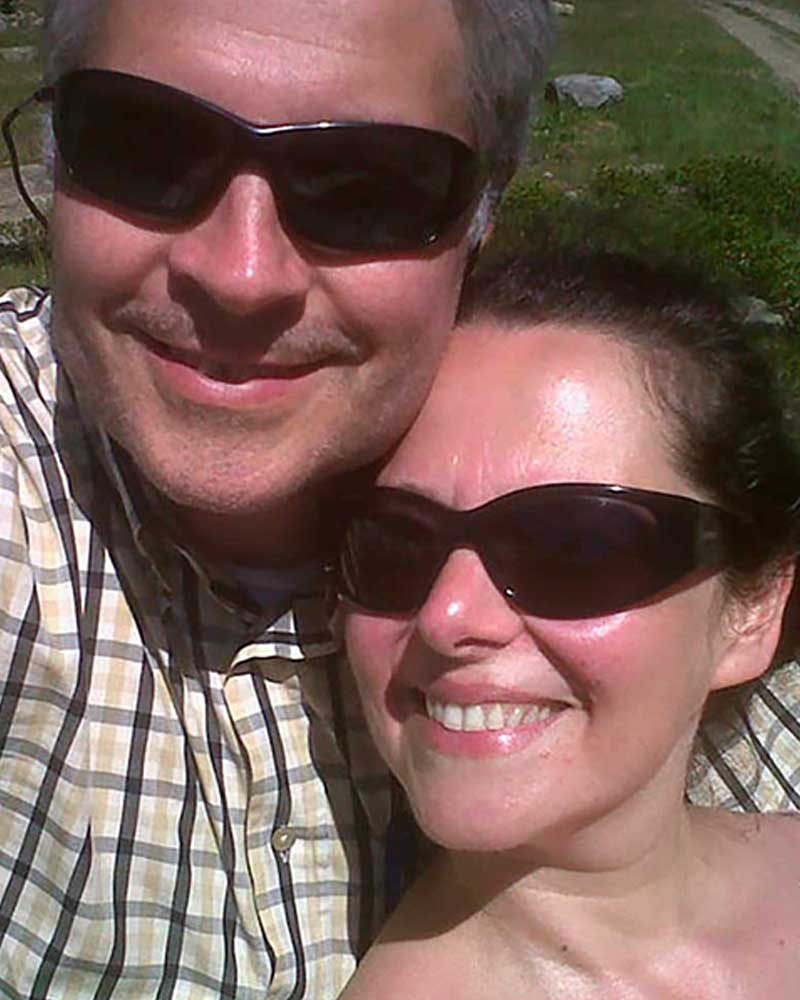
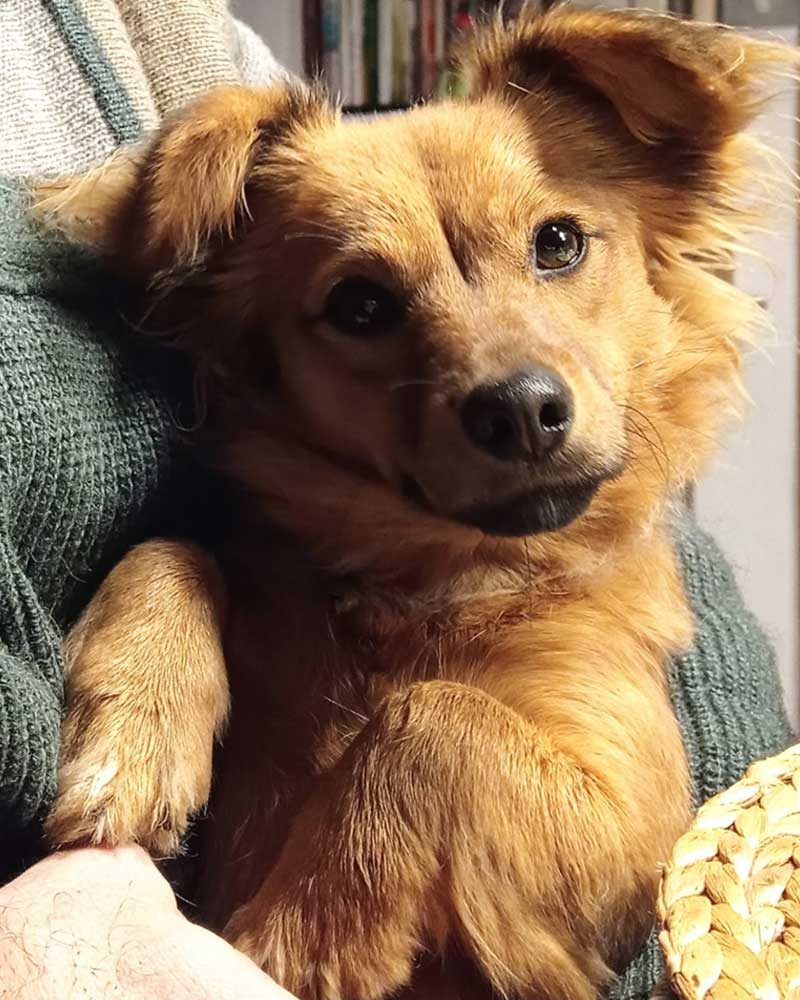
Two residents. But not only.
STEFANO AND DANIELA
Monte Sante Marie is the favourite haunt of people who are a little different from the usual crowd. As we always say: it’s this place that chooses — and selects.
Its owners, Stefano and Daniela, are already a little eccentric themselves: he a journalist, traveller, and music lover; she a publisher, communicator, and bibliophile.
Stefano Tesi, head of the family’s historic farming business, is also a journalist specialising in travel, culture, and lifestyle reportage from around the world, writing for the leading national publications in the field.
The author of books and guides, he also covers the environment, economics, agriculture, wine, and food and wine culture.
He personally oversees the running of the farm, and in particular the production of extra virgin olive oil, of which he is a professional taster.
For years a radio host, a devoted fan of rock, soul, and R&B, a record collector and music critic, he pours all of his many interests into conversation — one of the most popular activities among guests during after-dinner evenings at the farm.
His wife Daniela is a communications expert and publisher. Her “bright idea,” some years ago, was to make Monte Sante Marie the “heart” of her work through a tool that was, at the time, pioneering: the Internet. This turned her into something of a public figure, earning her a number of press articles as well as an appearance on the Maurizio Costanzo Show — a well-known Italian television talk show — as an example of a “young entrepreneur who discovered a new way of living and working successfully in the countryside.” Her specialities? The world of web marketing and corporate communications — for businesses of every kind, including those with great potential but small-scale operations, niche volumes, and books by independent authors. But also cooking: her cakes, olive-oil biscuits, and homemade bread are the stuff of memory. She is also the teacher behind the workshops held on the farm.
Around them orbit Pasquy, a little dog rescued from abandonment, and an uncertain number of cats, whose only real occupation is to sleep wherever they please and demand hefty rations of food and affection.
It's Monte Sante Marie that chooses.
THE SMALL COMMUNITY
The circle is completed by a cast of long-standing collaborators, a large and lively crowd of friends both famous and unknown, and countless guests who came once — and ended up becoming friends themselves — all of them taking turns at Monte Sante Marie as if in a bustling, interdisciplinary salon: journalists, celebrated writers (even Allen Ginsberg once passed through here…) and aspiring ones, artists and painters (like George Schneeman, an unforgettable and unforgotten friend, and the author of the drawing that appears in our logo and on our labels), poets, musicians, politicians, public officials (including a few well-known mayors), architects, well-known names from entertainment and the arts, entrepreneurs, executives, and no end of ordinary people who, in the hushed, rustic air of the Crete Senesi, have found relaxation, inspiration, interests, and love. It falls to all of them to liven up, with conversation and ideas, the evenings around the tables Daniela sets.
This is the “Monte Sante Marie Green Preservation Society.”
VALUES AND CHARACTER
Because Monte Sante Marie brings together a set of unique values
The landscape
The hamlet overlooks an extraordinary landscape, that of the Crete Senesi — unsurprisingly borrowed by directors, advertisers, and photographers for a flood of famous films and commercials.
Noble palazzi, medieval manor houses, rented houses, fortifications, underground passages, rural buildings, farmsteads, hermitages, and mills all come together to form the tangible record of the evolution of a rural centre continuously inhabited for 1,300 years. Protected by Italy’s Superintendency of Monuments and listed in the Golden Register of Tuscany of the Historic Houses Association – Associazione Dimore Storiche Italiane (A.D.S.I.) for the revitalisation work carried out by its owners, Monte Sante Marie is also a member of the Italian Institute of Castles – Istituto Italiano Castelli
Once a historic sharecropping estate, today’s organic farm stands as a remarkable example of revival and productive recovery in the Tuscan hill country.
The "new" economy
A testing ground for new ways of working remotely, a destination of choice for “new ruralists,” a pilot estate for Tuscan agritourism, an experimental farm for new crops — Monte Sante Marie holds a potential still waiting to be discovered, a true “workshop” of new ideas.
Despite owning a great number of valuable buildings, the Estate ruled out any plan to sell them from the very outset, launching instead an innovative “custodianship” scheme for its abandoned properties: long-term free use granted to third parties in exchange for restoration and consolidation work.
The cultural legacy
Monte Sante Marie is a kind of “open book,” freely available for consultation by historians, sociologists, architects, legal scholars, and agronomists interested in studying the past.
Slow rhythms and silence
Home to a publishing house and a gathering place for artists, writers, creatives, photographers, bibliophiles, and collectors, Monte Sante Marie is a true “cultural island” — open to all, but not for everyone.
Ravines, clay badlands, and gullies home to wild boar, wolves, roe deer, herons, badgers, weasels, foxes, pheasants, hares, porcupines, buzzards, hawks, squirrels, turtle doves, pigeons, and pine martens — all animals easily encountered while walking. Hunting is prohibited within the area.


