The Lombard Origins.
A Watchtower.
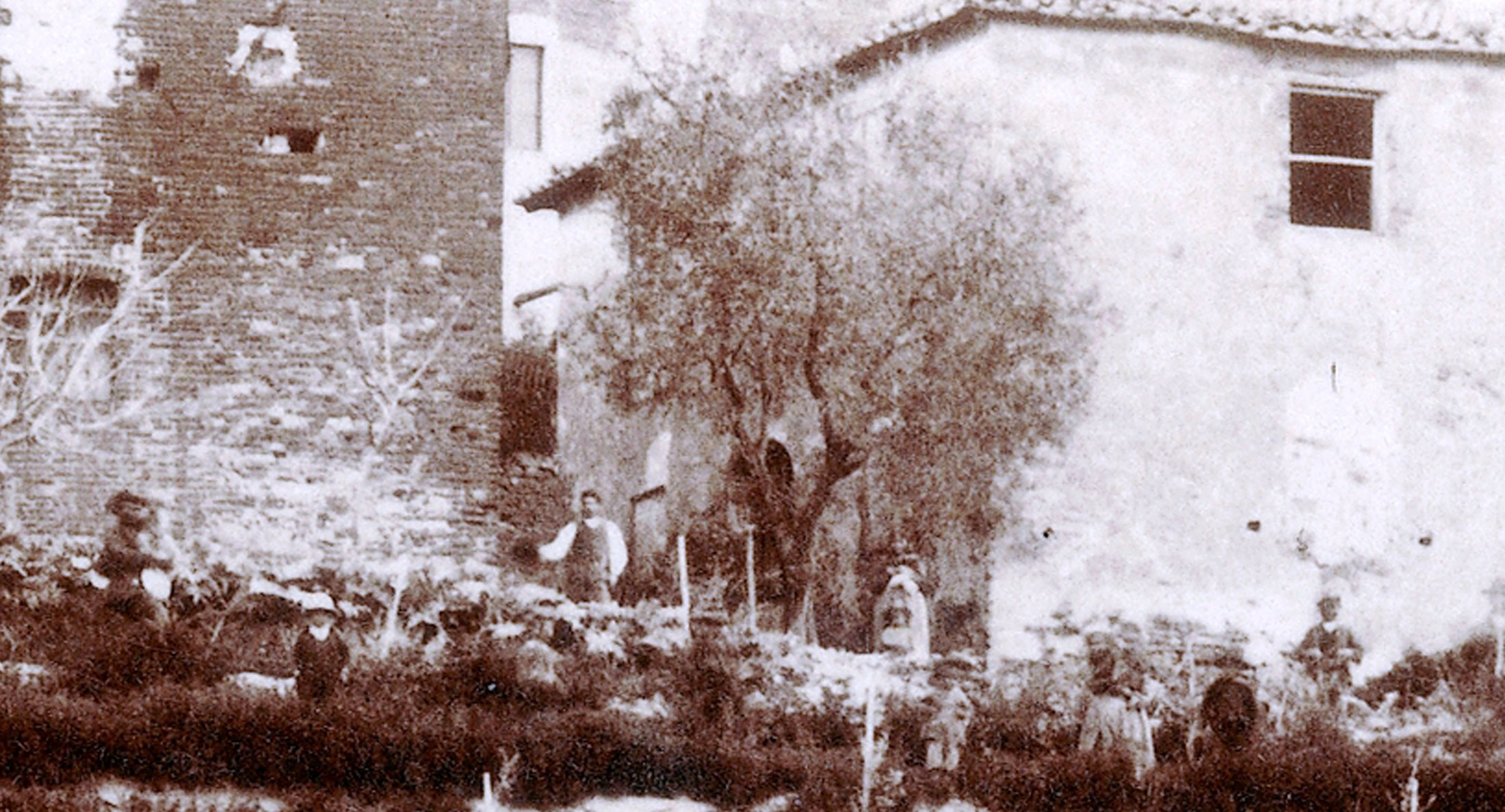
No evidence or documentation exists to confirm any pre-existing Etruscan presence at Monte Sante Marie, although several elements could be taken as clues.
Monte Sante Marie most likely began as a watchtower in the Lombard era, built at the time when the road connecting the two great arteries of the period was constructed: the Via Lauretana and the Via Scialenga.
The Scialenga ran — and still runs — along the route from Siena towards Arezzo, while the Lauretana went, and still goes, from Siena to Loreto via Asciano. Once the connecting road was built, all the land within that wedge of territory became reclaimable. At its centre, marking this reclamation, the parish church (pieve) was built as a symbol of “reconquest” and religious jurisdiction: it was consecrated to San Vito, with the addition of the epithet “in versuris” — meaning “land destined to be turned over,” that is, reclaimed and made fit for cultivation. This has always been, some two kilometres before the hamlet, the parish church of Monte Sante Marie (which nonetheless contains two further churches within it, and once had three, all subordinate to that of San Vito). A sacred site of extraordinary historical importance: it is recorded as already “ancient” in the famous dispute of 714 between the bishops of Siena and Arezzo over control of certain border parishes, and it was also home to the only baptismal font in the area besides the one at Vescona.
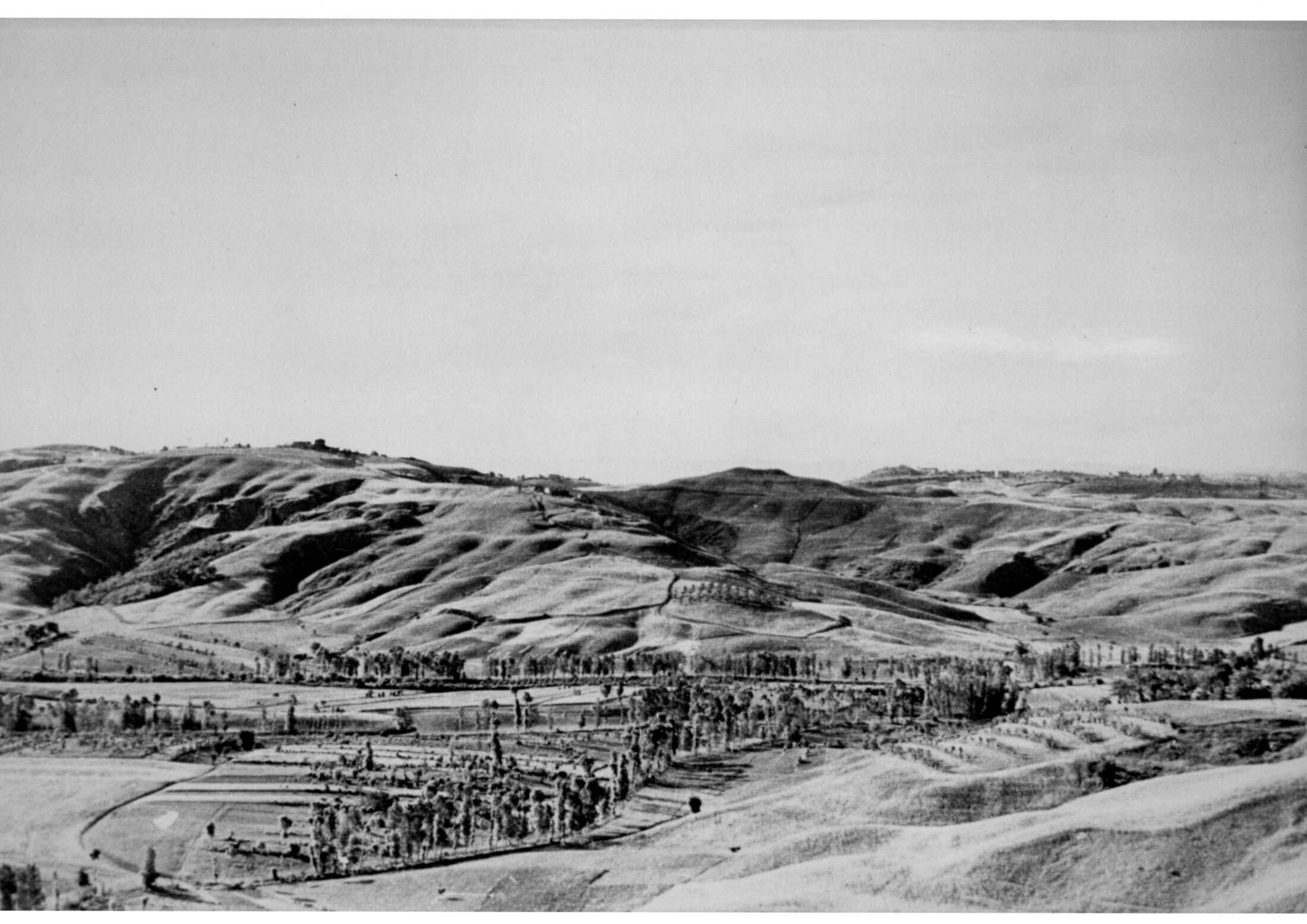
Why was the tower not built in the same location as the parish church? Probably for strategic reasons: only from Monte Sante Marie can both of the area’s main valleys be seen at a glance — the Ombrone valley, which runs to the east, and that of the Camerone stream, to the west.
With the arrival of the Franks, the feudal era, and the resulting incastellamento (the fortification and consolidation of settlements around castles), the tower first became one of the strongholds under the control of the Counts Scialenghi, of Salian Frankish stock, before falling, in the second half of the 12th century, into the orbit of the conflicts between the Cacciaconti — a branch of the Scialenghi who had settled at Monte Sante Marie, making it their principal residence — and the expansionist ambitions of the Commune of Siena.
It was in this period that the first fortified castle and the surrounding feudal village were built, forming part of the network of strongholds with which this kinship alliance of noble families had equipped itself to consolidate a dominion stretching from the Berardenga to Radicofani.
THE CASTLE
Downfall and Revival. Destruction and Rebuilding.
SIEGES AND DESTRUCTION.
The castle suffered numerous sieges, along with the destruction, damage, and rebuilding that came with them. All of these events are well documented in ancient charters and chronicles — peace treaties, deeds, and settlements between warring parties were signed right here at Monte Sante Marie.
1176 AND THE SIENESE STATE
A BORDER CASTLE
THE SELF-GOVERNING COMMUNE
By the early 1300s, over sixty “hearths”

On the eve of the Black Death
1,700 inhabitants
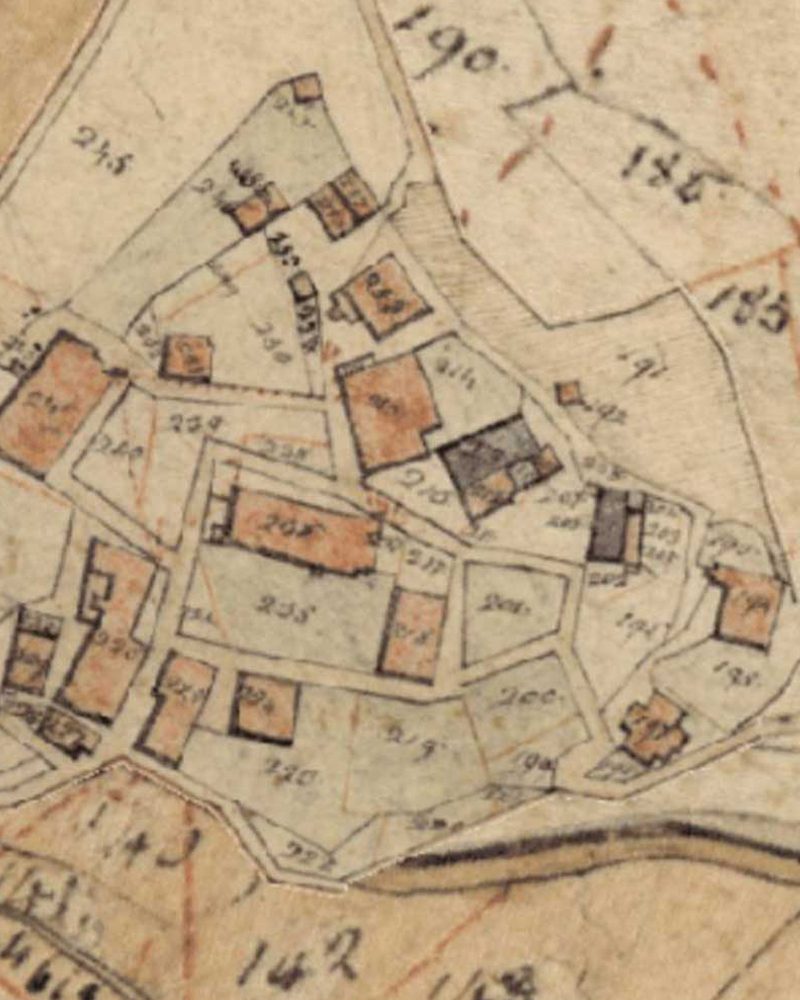
Over time, it gradually grew into a populous fortified hamlet and a self-governing commune under Sienese authority, reaching, by the early 1300s, over sixty “hearths” — that is, family units — thus becoming (and remaining for centuries) the most important reality, both politically and demographically, in the Crete area around Asciano, after Asciano itself.
Tangible evidence of this can be found in the Cartulario della Berardenga, the Sienese land register of the 14th century: one of the very few surviving fragments of this document concerns precisely the settlement of Monte Sante Marie. And so, out of the mists of history, emerge the names, occupations, family structures, properties, incomes, and crops of the 500 people who lived in the hamlet at the time. According to more recent estimates, at the height of its development — on the eve of the 1348 plague — the community of Monte Sante Marie numbered around 1,700 people. An extraordinary figure, never recovered since, which speaks volumes about the importance of the settlement.
On the eve of the Black Death
THE COMMUNE'S STATUTE
About a century and a half later comes the Statute of the Commune of Monte Sante Marie, preserved in the historical archive of Asciano and rich with fascinating information about life in the village, through its remarkably detailed regulation of public life.
This importance came to a military end in 1555, with the absorption of the State of Siena under Medici rule: while its defensive and military functions ceased, Monte Sante Marie remained a peaceful and significant agricultural centre, as well as the most populous settlement in the area after Asciano.
Bell-Tower Rivalries
There was no shortage of diplomatic crises, friction, and local rivalries with the neighbouring commune. One memorable document survives: a letter from the podestà of Asciano to his counterpart at Monte Sante Marie, complaining that thieves — the “latrones” — fleeing after their misdeeds so often took refuge right there at the Monte.

The First Architectural Transformation
1777 AND THE GRAND DUKE
For over two centuries, life carried on all the same — busy and peaceful. The old castle structures, no longer of any real use, remained standing to protect the settlement, home to lords and peasants, tenant farmers and smallholders alike. It was during this period that a first, slow process of urban and architectural transformation began: with no public investment forthcoming, now that the strategic need for it had faded, the medieval buildings underwent a long and gradual process of decay, abandonment, reuse, and adaptation — until, in 1777, the great administrative reform of the Grand Duke of Tuscany abolished the commune of Monte Sante Marie, along with many others, downgrading it to a hamlet within the commune of Asciano.

A hamlet in full vitality.
THE SHARECROPPING ESTATE
This marks another decisive moment in the history of the hamlet. With its administrative functions now also gone, the property — until then fragmented, and belonging partly to noble Sienese families and partly to small or very small landowners — began a process of gradual consolidation, eventually unifying into a single large sharecropping estate, home to landowners, farmers, labourers, tradespeople, and residents alike.
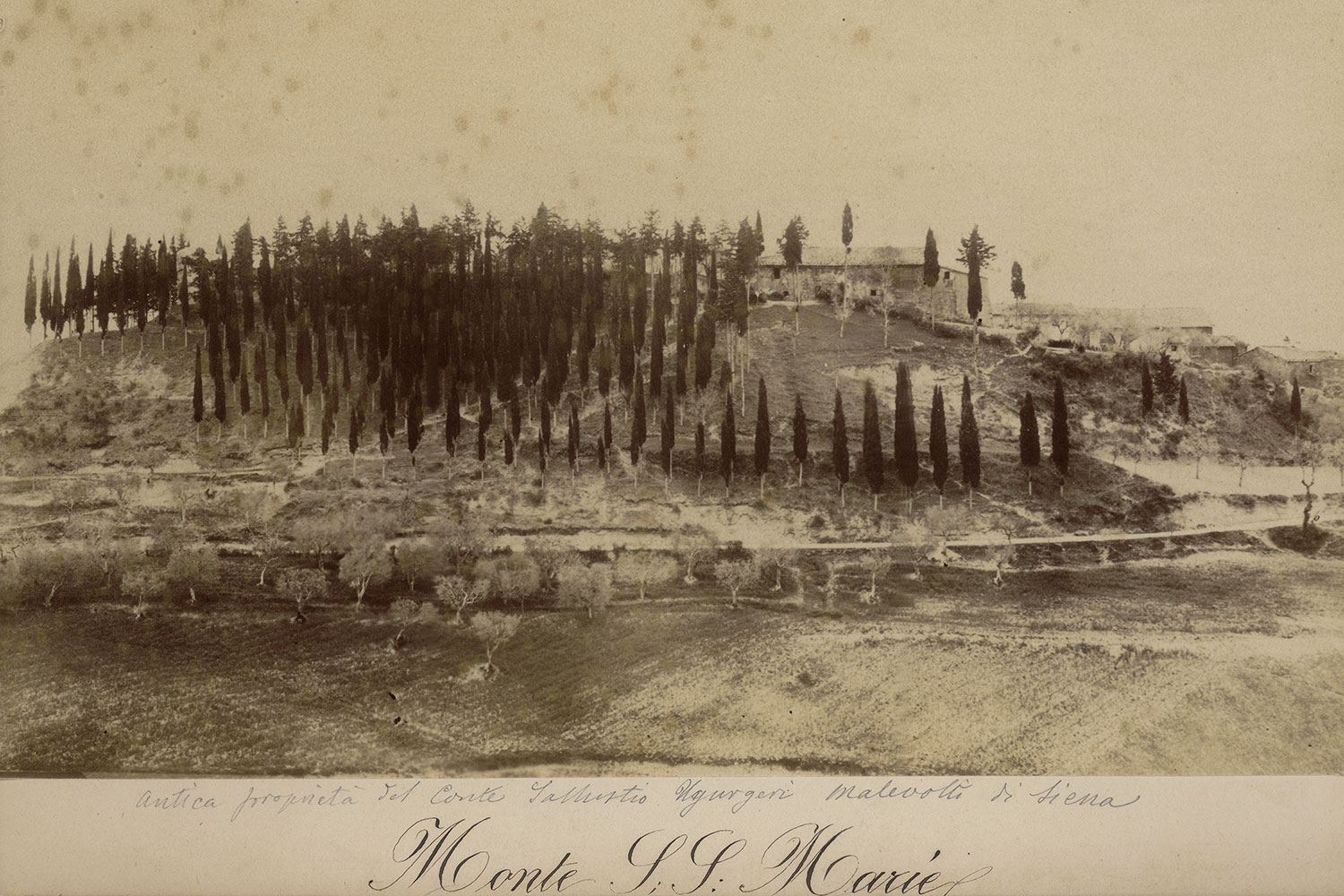
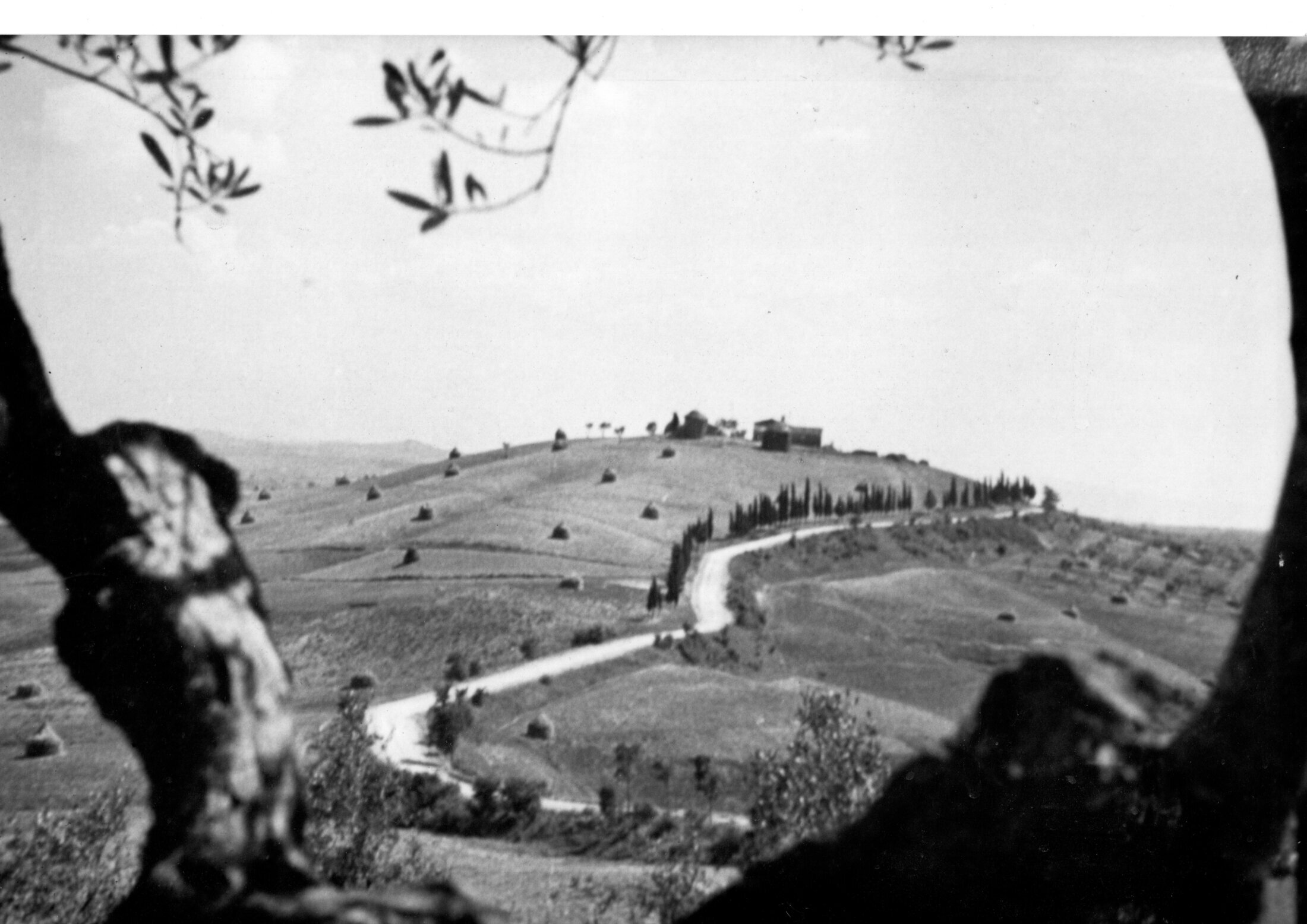
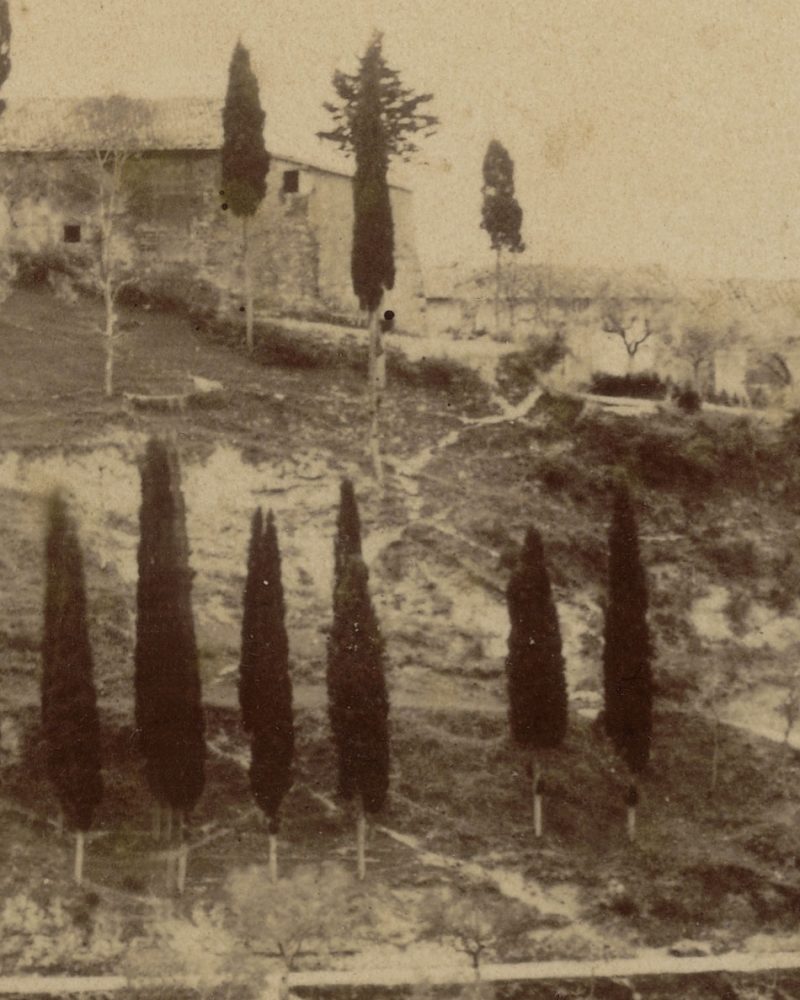
Another step was taken, in a rural key, in adapting the old architectural structures to new socio-economic needs. The interventions were often heavy-handed, at times outright destructive — and, seen through today’s eyes, they can appear (and in a sense truly were) catastrophic for the conservation of the historic built heritage. At the time, however, they seemed entirely justified by the circumstances and needs of the day. This slow transformation lasted roughly a century, from the late 1700s to the late 1800s. Long stretches of the walls disappeared, along with the Siena Gate, while the Asciano Gate was absorbed into the building that would become the manor house. The hamlet lost part of its typical shell-like shape, with the main street climbing to the top of the hill. The result is what can still be seen today: a large community gathered around the square, rich in threshing floors and adjoining spaces, the manor house with its garden, and the cypress park.
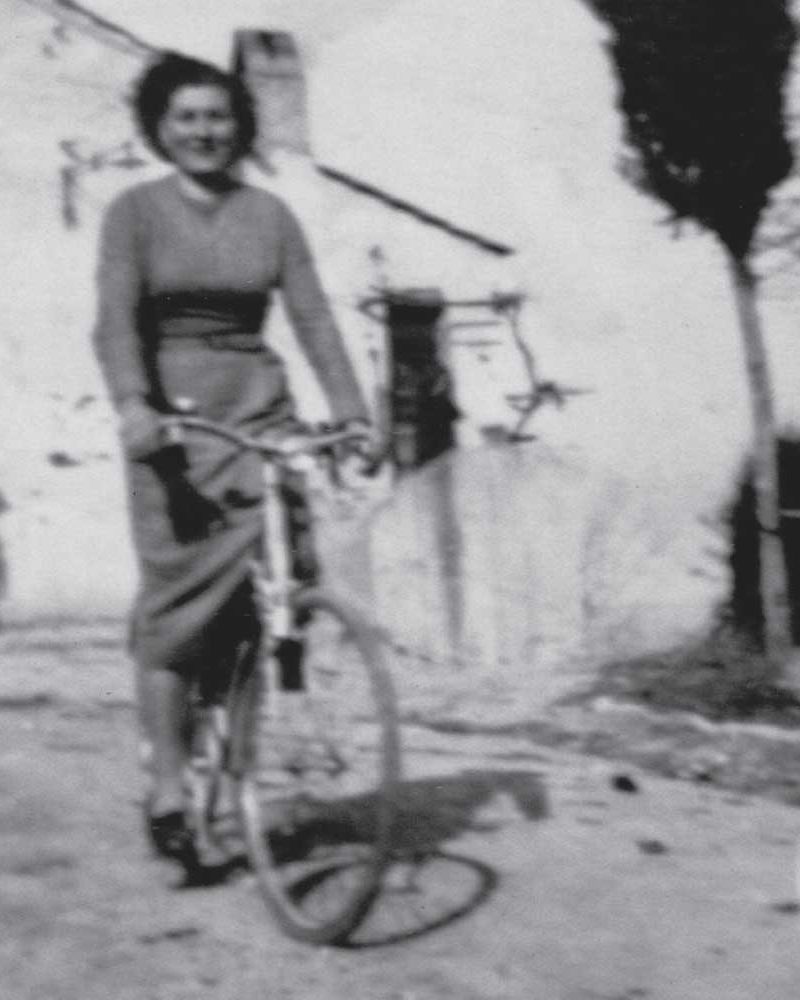
What never changed was the vitality of the place: between the 1800s and 1900s, an elementary school was built, along with numerous shops, a dopolavoro recreational club, artisans’ workshops, and new houses. The estate, which had by then passed to the Tesi family, functioned as a closed and entirely self-sufficient system that, counting both those living in the historic centre and the families on outlying farms, reached a population of 600 between the two World Wars. Even the train on the newly built Asciano–Chiusi railway line stopped at the tiny — and still existing — Monte Sante Marie station, down in the Camerone valley.
THE 20TH CENTURY
A massive and unexpected transformation.
THE EARLY 1900s
In the early 1900s, the hamlet underwent yet another transformation — massive and, for a long time, inexplicable — which further reshaped the face of the ancient village. Until a few years ago, no one could offer a rational explanation for it: why, people wondered, in a period of severe economic and social crisis, was there a sudden need to carry out such deep and drastic renovations — earthworks, the demolition of entire buildings, floor levels raised by three metres, other buildings lowered by one or two storeys, internal roads completely redrawn?
The answer came by chance, when part of the western wall of the manor house — a rubble-filled muro a sacco from the 13th century, a metre thick — was found to have serious cracks and had partly already collapsed. During repairs, it emerged that the wall of an entire wing of the building was solid up to a certain height, but from a certain floor upward was literally hollow: someone, working in great haste, had rebuilt an outer wall and an inner one, leaving the space between them empty and resting the upper floors on top of it.
A hurried job, explainable only by the need to shore up the structure quickly, with limited means.

August 25, 1909
THE 1909 EARTHQUAKE
Further investigation revealed that on 25 August 1909, a catastrophic earthquake struck several towns in the Crete Senesi, killing many people (the army was called in, as the chronicles of the time attest) and causing severe damage to the region’s architectural heritage. One can only imagine what must have happened in remote rural hamlets, with their already ancient buildings, patched together over centuries and often crumbling. Monte Sante Marie was one of them. It was in these circumstances that the hamlet underwent yet another transformation. The floor plans of entire buildings changed: some were torn down and rebuilt, others radically altered, had their tops lopped off, widened, or reduced. This explains, for instance, certain exterior plasterwork left exposed to the elements but made with materials suited to indoor spaces — the remnants of room finishes whose walls, through collapse or demolition, became outer walls. It also explains the recurring discovery of unknown underground spaces, seemingly disconnected from the building’s current layout.
Much of it, as a result of the infill work, ended up buried underground.
It is no coincidence that beneath Monte Sante Marie there are four levels of cellars at different depths. There are also a few tunnels which, in the Middle Ages, connected the various buildings. All of this is also why it is so extraordinarily difficult to reconstruct the architectural history of this place — a place that has been, and this is its single greatest peculiarity, as well as the very source of its fascination, inhabited, lived in, used, and continuously transformed, adapted again and again to the changing needs of life, for more than 1,300 years.
THE POST-WWII YEARS
Whole families abandoned the hamlet and the countryside.

The Exodus from the Countryside.
THE END OF SHARECROPPING
In the years after the Second World War, the exodus from the countryside and the collapse of the sharecropping system hit hard, and the village — increasingly stripped of services, or never provided with them at all — emptied out year after year. The farm switched to salaried labour and managed to survive, but its human fabric was inexorably lost. Whole families abandoned the hamlet. Only the elderly remained. In the 1960s the shops closed. In the early 1970s, the school followed, and then even the school bus service. The lack of a water mains system, and the withdrawal of public lighting, delivered the final blow. The old houses, left without maintenance, deteriorated rapidly, with no prospect of ever being put to economic use again.
The last inhabitant died in 1976, while the owning family was decimated, one death after another, by bereavement.

One Hundred Years of Solitude
ABANDONMENT.
AND REBIRTH.
Decades of semi-abandonment followed for Monte Sante Marie — decades of devastation, theft, vandalism, and every kind of plunder.
Then, the beginning of rebirth. And the story, fortunately, continues…